Corviale
🎨 Street Art al Corviale – Via Marino Mazzacurati 23, Rome
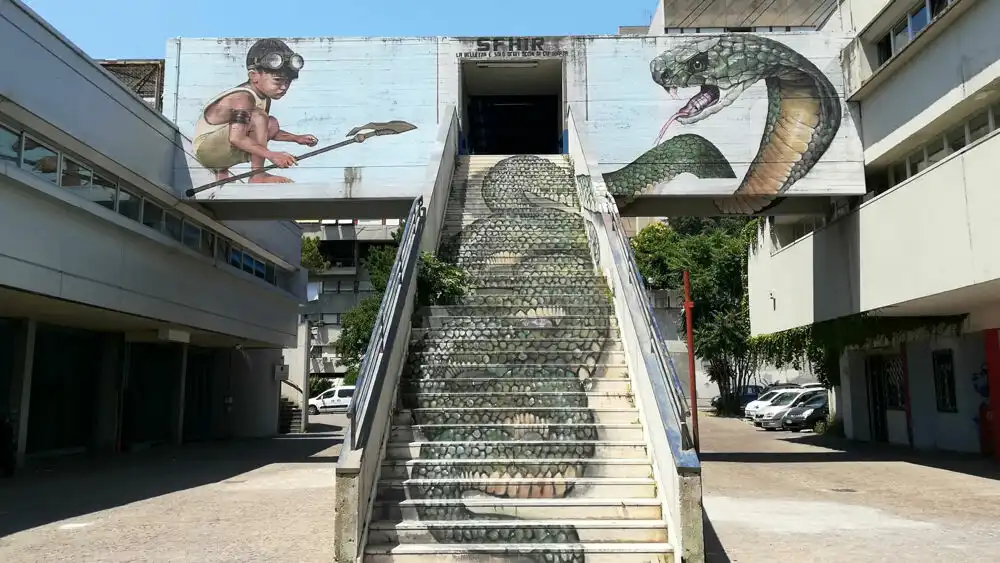
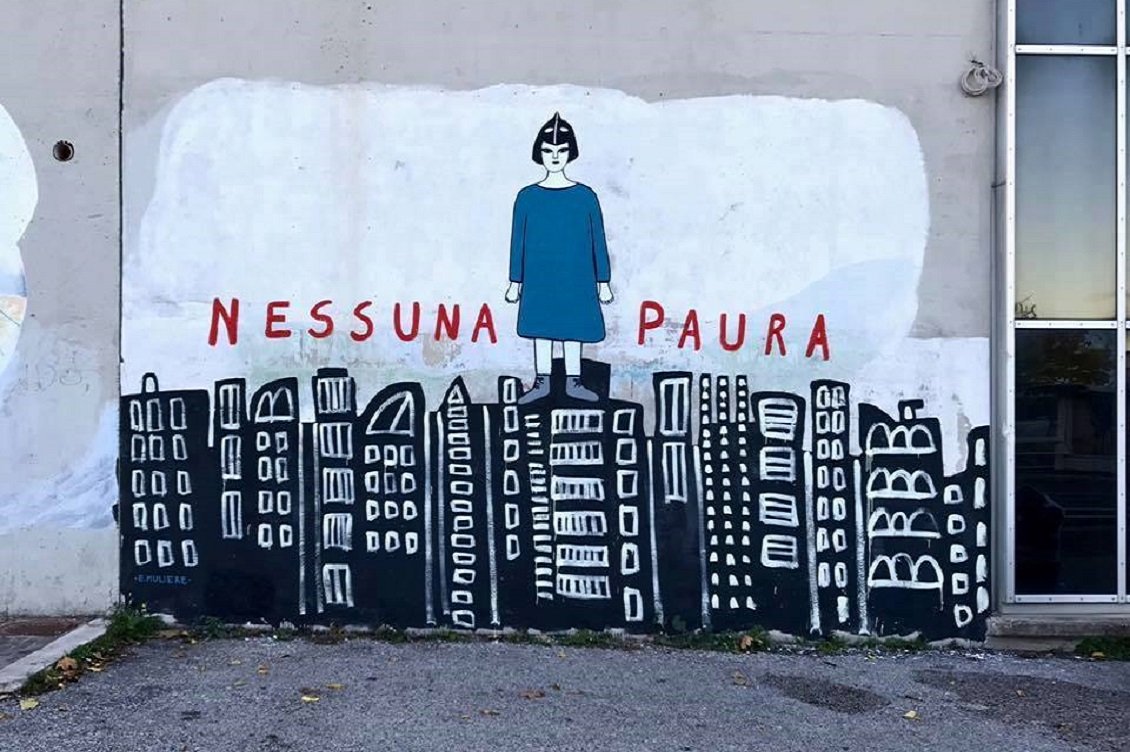
Corviale, known as the Serpentone, is one of Italy’s most iconic residential complexes: a huge building almost a kilometre long that symbolises Roman social housing in the 1970s. In recent years, several façades and areas of the complex, particularly in the Via Marino Mazzacurati 23 area, have been transformed by street art interventions that have restored colour, identity and a new narrative to one of the capital’s most controversial neighbourhoods.
🧱 The urban context
The Serpentone is a complex place, rich in contradictions, stories and social stratifications. Its monumental dimensions and large wall surfaces make it a natural setting for artistic interventions of considerable impact.
The area around Via Marino Mazzacurati 23, located in the liveliest part of the complex, features murals that are part of a wider cultural regeneration project involving residents, associations and artists.
🎨 Characteristics of the works
The works created in Corviale have some distinctive features:
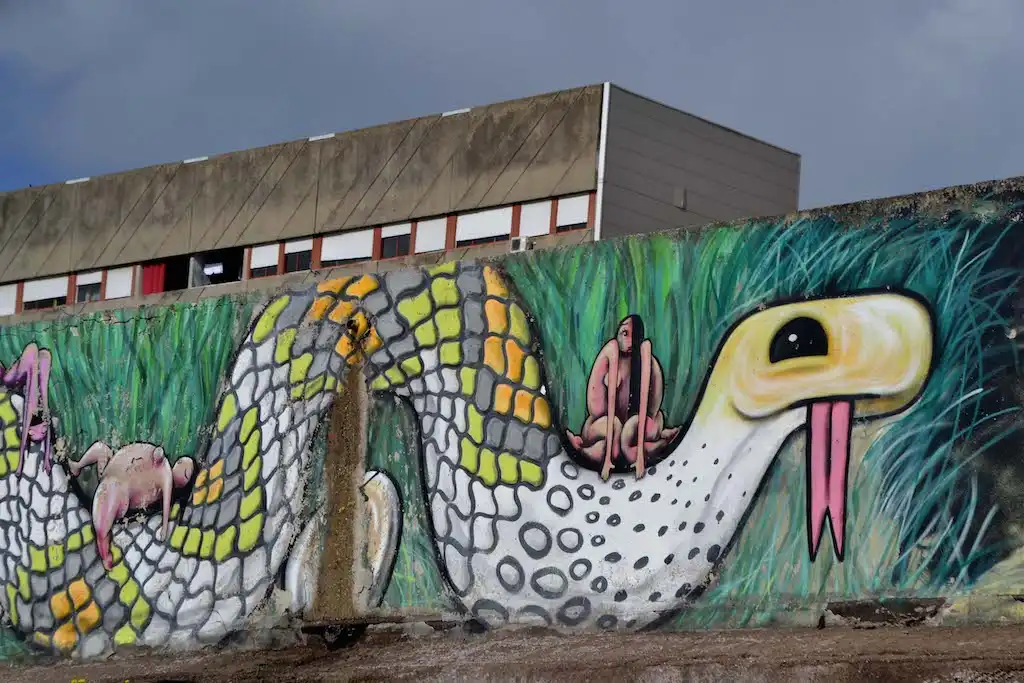
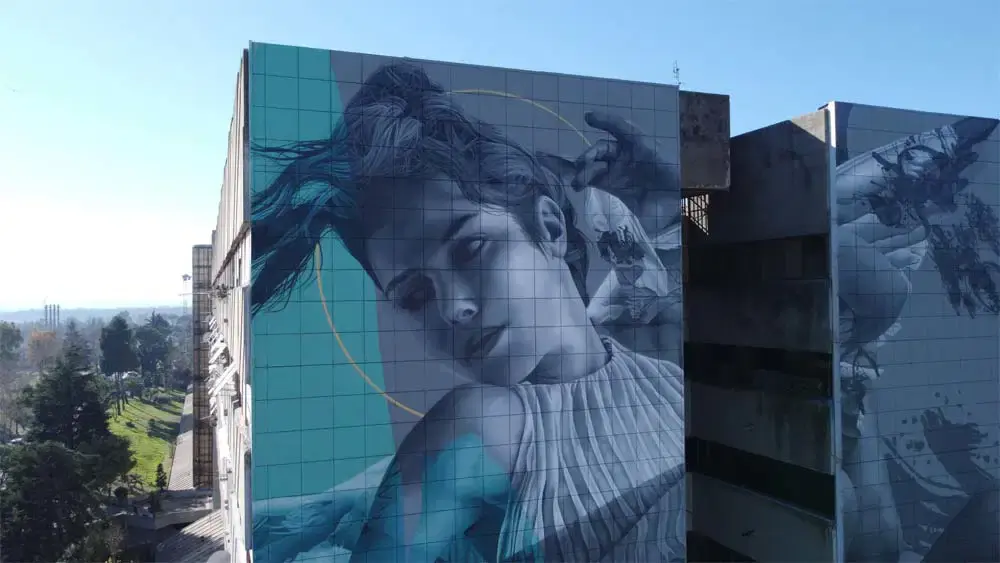
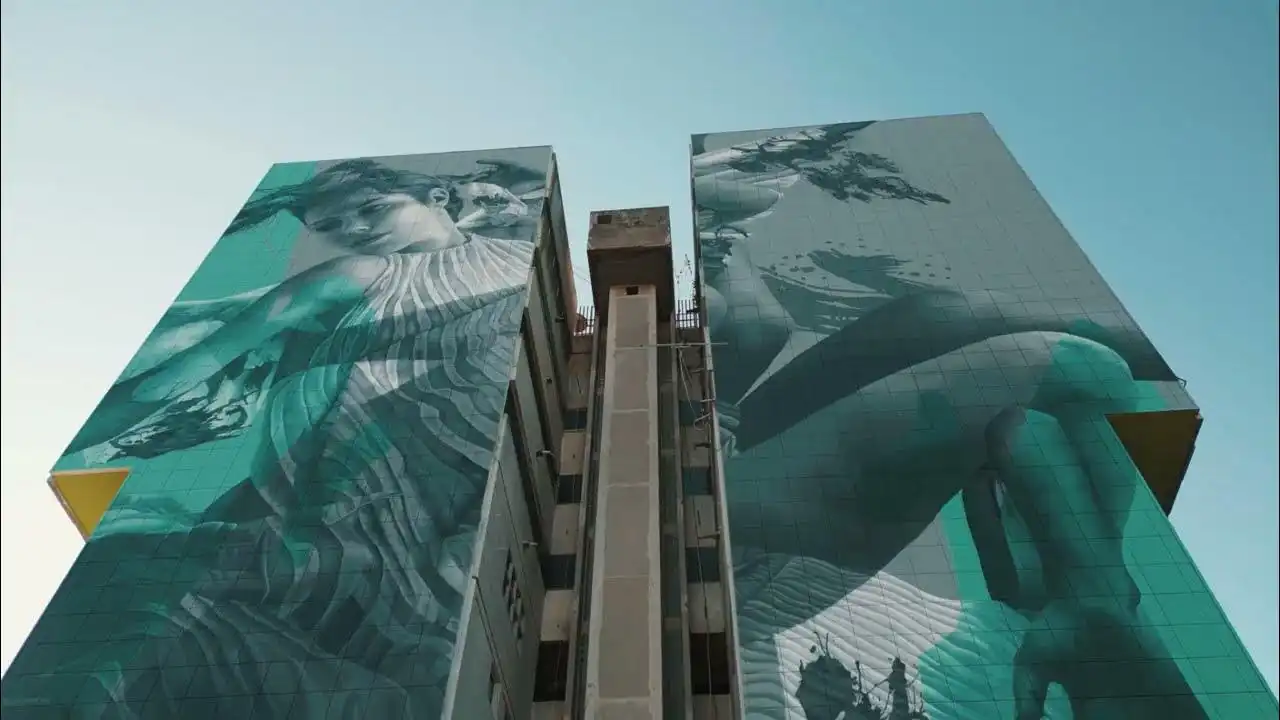
Large-format murals, often covering entire walls.
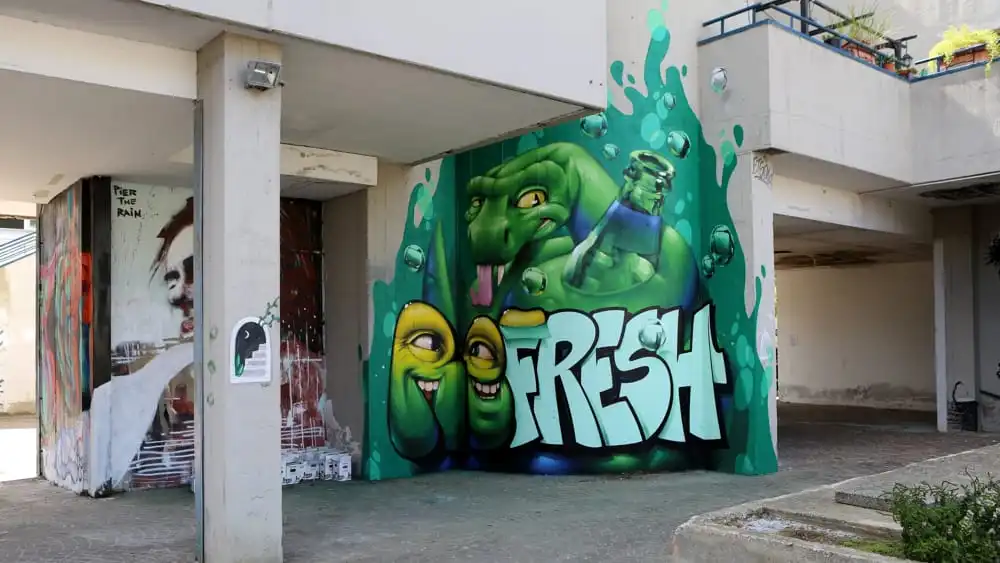
Different styles, ranging from figurative to symbolic, from abstract to social narrative.
Presence of subjects that reflect everyday life, the concept of community, the relationship between man and architecture.
Use of intense colours to break up the monotony of concrete and make spaces more welcoming.
🌍 Recurring themes in Corviale’s works
1. Identity and community
Many of the works depict people, faces and scenes that evoke the popular spirit of the neighbourhood.
The works seek to restore dignity and visibility to a context that is often superficially labelled.
2. Regeneration and rebirth
Street art functions as a tool for social change:
a way to reactivate spaces, improve perceptions of a place and create dialogue.
3. Nature and hope
Some murals include natural elements – trees, birds, flowers, symbols of growth – which contrast with the architectural linearity of the Serpentone.
4. Historical memory and contemporaneity
The works alternate references to the neighbourhood’s past, the initial “dream” of the urban planning project and the real lives of today’s inhabitants.
Why visit the street art of Corviale
The size of the complex makes visiting it a unique experience in Rome.
The works are monumental and interact directly with the imposing architecture.
It is one of the places where street art takes on a truly social significance: here, art does not decorate, but interprets and gives voice to the local area.
It offers a different perspective on the city, far from the tourist trails.
How to get there
Bus lines: 775, 786, 889, 98, C7
Train lines: FL1, FL5