🎨 Street Art in Settecamini – Via di Settecamini 1
The Settecamini area, located on the north-eastern outskirts of Rome, has undergone a major artistic redevelopment project that has transformed several residential buildings into monumental murals. The area has become a veritable open-air museum, thanks to the contribution of Italian and international artists involved in public art programmes promoted in the area.
The urban context
Settecamini is a neighbourhood characterised by large public housing complexes, regular buildings and wide spaces between buildings: an ideal terrain for street art with high visual impact.
The focal point of the artistic intervention is located at Via di Settecamini 1, where some façades have been completely redesigned with works that combine social, urban and symbolic themes.
Characteristics of the works
The works on display at Settecamini are generally:
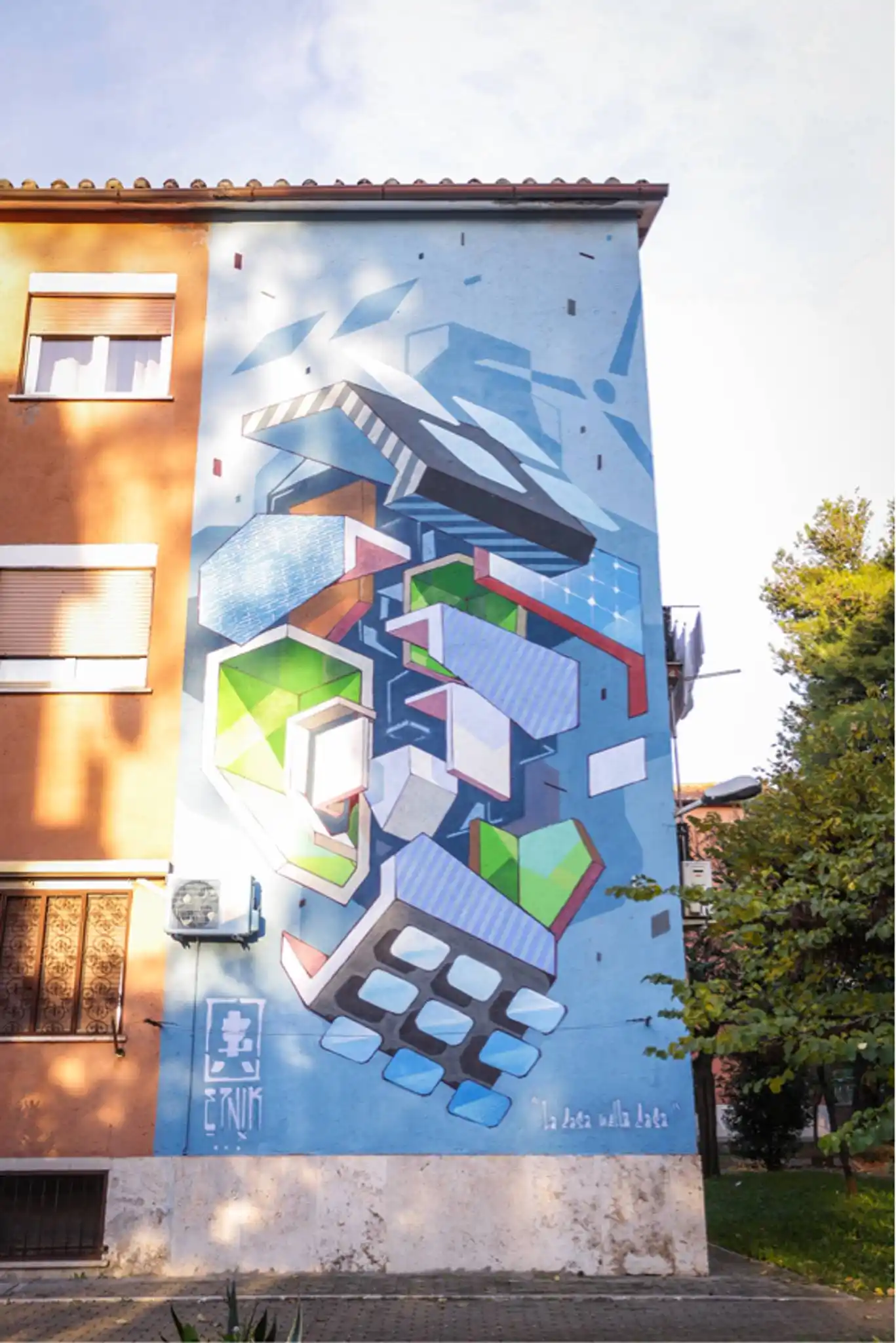
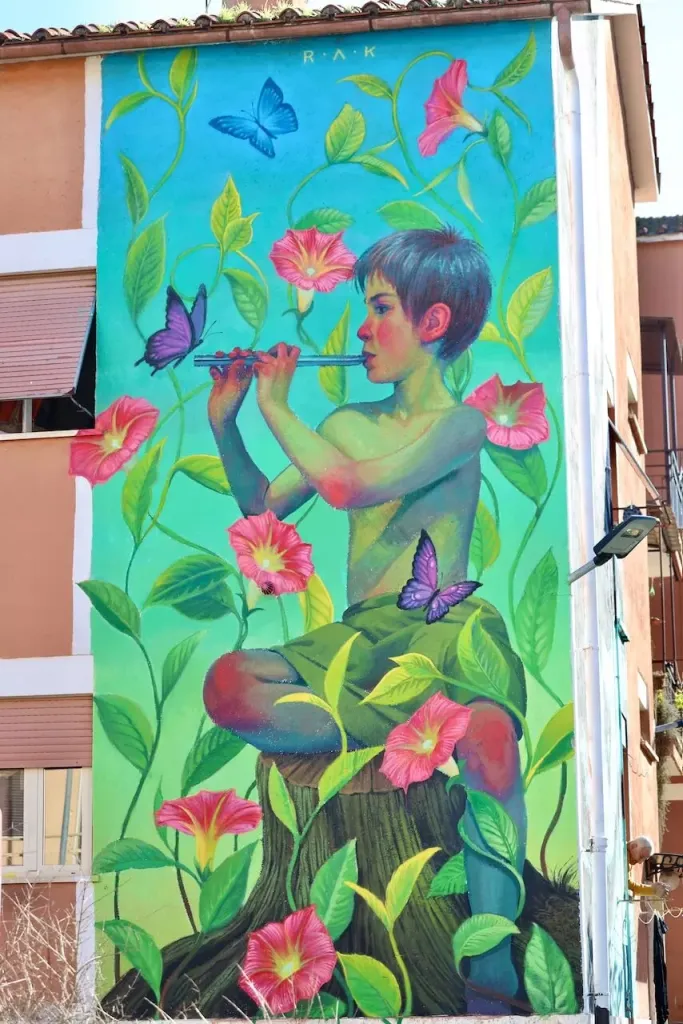
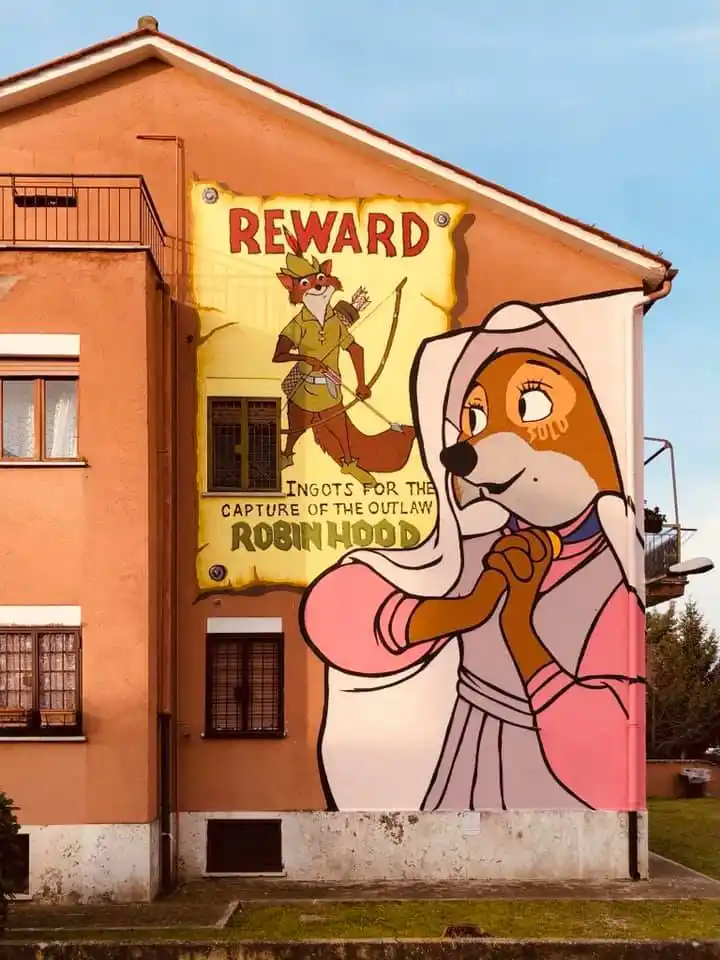
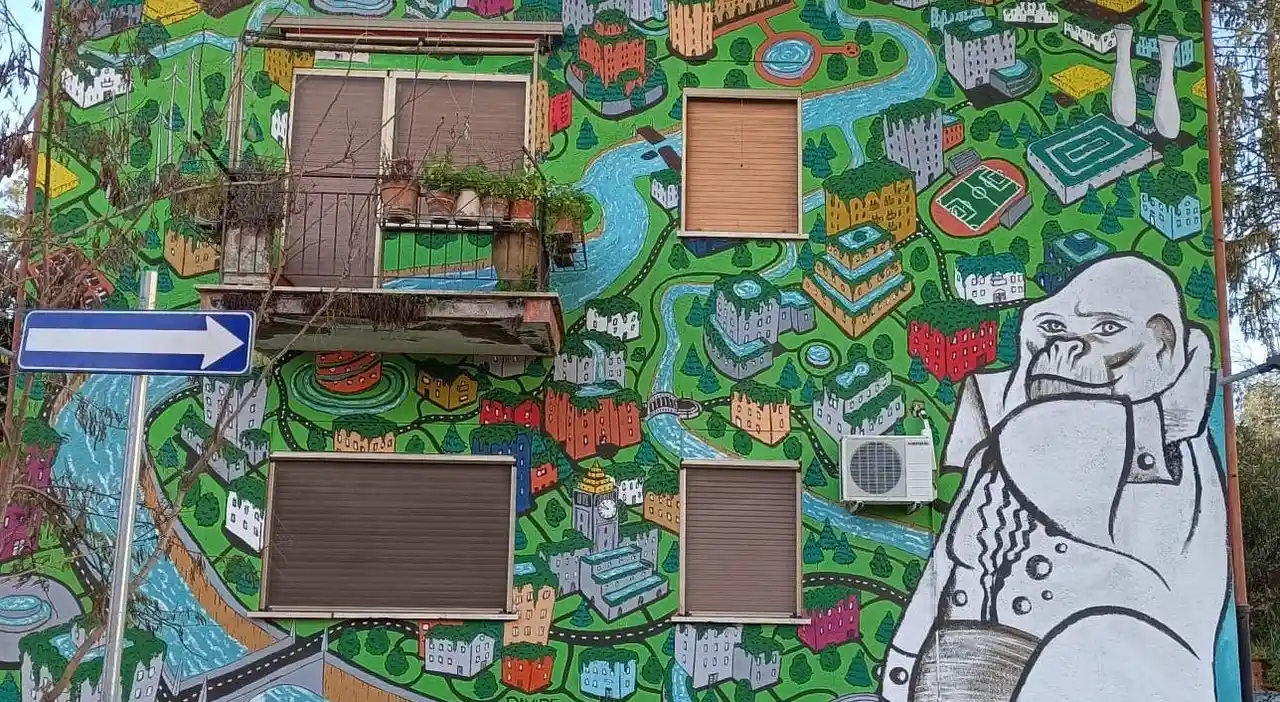
murals on large facades, often exceeding 10–12 metres in height
created using mixed techniques: acrylic paints, spray cans, wall paints
characterised by a narrative, figurative or abstract style depending on the artist
aimed at promoting topics such as:
neighbourhood identity
multiculturalism
nature and environment
historical memory
social transformation
✨ Recurring themes in the works of Via di Settecamini
1. Community and local identity
Many works symbolically represent everyday life in the neighbourhood: families, children, people’s faces, scenes of coexistence and socialising. It is a way of highlighting the popular spirit of Settecamini.
2. Nature and landscape
Several murals include natural elements such as trees, flowers, hills and animal figures. This is to create a poetic contrast with the large geometric surfaces of the residential buildings.
3. Contemporary symbolism
Some works feature stylised figures, colour schemes and abstract shapes, with open interpretations. This approach is typical of urban artists who work with international visual languages.
4. Regeneration and the future
The common thread running through the project is urban regeneration: the murals in Settecamini seek to make spaces more welcoming and lively, helping to improve perceptions of the neighbourhood and creating new aesthetic landmarks.
Why visit the works of Settecamini
The colourful façades offer an easily explored walking tour.
The experience is immersive: the works are very large and interact directly with the urban fabric.
It is a successful example of how urban art can redesign peripheral areas, generating a sense of belonging and cultural curiosity.
How to get there
Bus routes: 040F, N041, 040, 041
Metro lines: B. Ponte Mammolo - Rebibbia
Train lines: R, FL2